Why Email Marketing Is Still the Best Money Your Brand Will Ever Spend
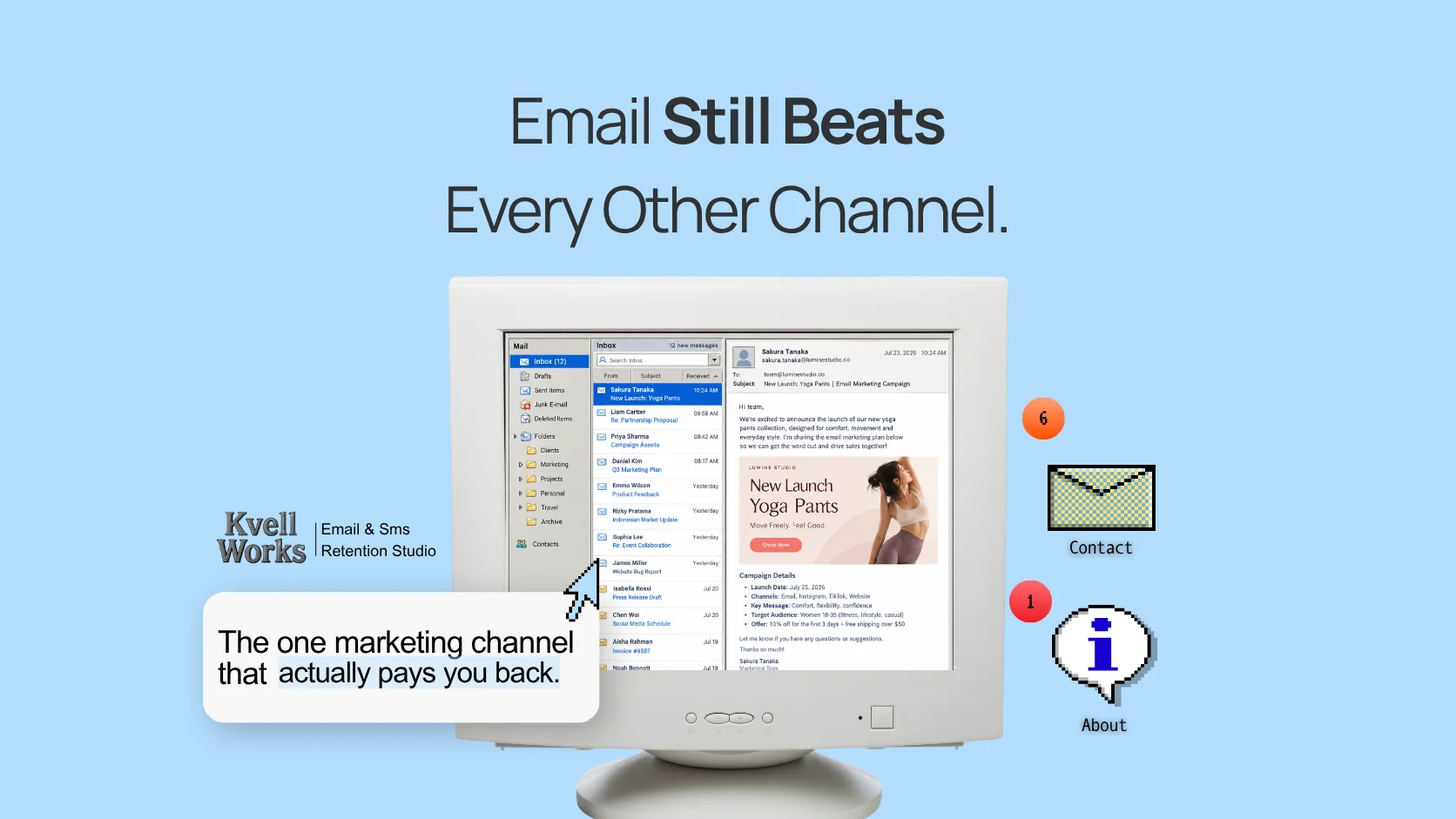
If you run an online store, chances are you've thrown some cash at Facebook ads, maybe dabbled in influencer shoutouts, or tried to crack the TikTok algorithm.
All of that has its place. But there's a channel that quietly outperforms almost everything else, and most brands still treat it like an afterthought: email.
Let's talk about why that's a mistake, what the actual numbers say, and why more brands are handing this part of their business over to specialists instead of trying to DIY it.
The math nobody argues with
According to Litmus's State of Email research, the average brand sees somewhere between $36 and $42 back for every $1 they spend on email marketing. Retail and ecommerce specifically land even higher, around $45 per dollar. Compare that to Google Ads, which averages about $8 per dollar, or social media ads, which typically land somewhere between $2 and $5. Even SEO, which everyone loves to talk about, comes in around $7.50.
There's really no other channel in the same league. Email isn't just a nice-to-have. It's often the highest-margin thing a brand does all year, and it's not close.
And here's the part that surprises people: it's not the big splashy campaigns doing the heavy lifting. Omnisend's data shows that automated emails (the ones that fire off on their own when someone signs up, abandons a cart, or finishes a purchase) generate 37% of all email sales, despite making up only 2% of total sends. You set those up once, and they keep earning money in the background while you're doing literally anything else.
Why this matters more than chasing new customers
Here's the part most brands get backwards. They spend all their energy and budget trying to pull in new customers, while the people who already bought from them, who already trust them, just sit quietly in a list getting ignored. Email is the channel that fixes that, because it's the one place you actually own the relationship instead of renting attention from an algorithm.
That neglect is expensive in ways that don't always show up on a dashboard. Bain & Company's research, which is probably the most cited stat in this whole industry, found that acquiring a new customer costs somewhere between 5 and 25 times more than keeping an existing one. And the effect isn't small either. Bain also found that improving retention by just 5% can boost profit by 25% to 95%, depending on the business.
HubSpot's numbers tell a similar story from a different angle. An existing customer has a 60 to 70% chance of buying from you again. A brand new prospect? Somewhere between 5 and 20%. Repeat customers also spend about 31% more on average and are 50% more likely to try a new product you launch. Put simply, the people who already know your brand are just... easier to sell to. Roughly 65% of most companies' revenue comes from people who've already bought before.
Email is how you actually reach those people, consistently, without paying per impression every time you want to say something. So the brands quietly winning right now aren't necessarily spending more on ads. They're just doing a better job of talking to the customers they already have, in the one channel that's sitting right there in everyone's pocket, already trusted enough to let in.
Why most brands still get it wrong
If email is this profitable, why does almost every brand's email program feel like an afterthought? Usually it comes down to one of three things. The flows are generic. A default Shopify or Klaviyo welcome sequence isn't built around your specific customer, it's built to be good enough for everyone, which means it's not actually great for anyone.
The segmentation doesn't exist. Sending the exact same email to your best repeat customer and someone who bought once and never came back is a fast way to get ignored, or worse, unsubscribed. Or, most commonly, nobody owns it. Marketing teams are stretched across ten channels and email quietly becomes the thing that gets a rushed campaign once a month instead of a proper system. This is exactly the gap that agencies built specifically around retention are starting to fill, and it's where Kvell Works comes in.
This is where Kvell Works fits in
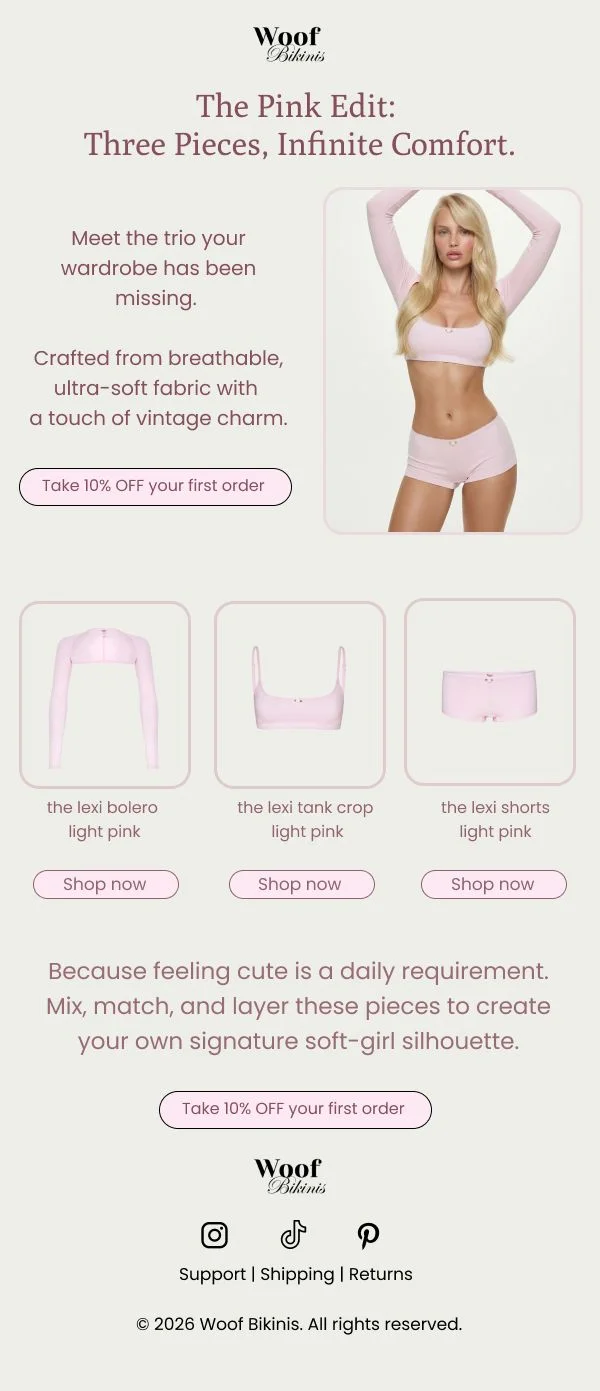

Kvell Works is a retention studio built around one idea: most brands are sitting on untapped revenue in the list they already have, and every email left unsent is money left on the table.
Founded by Gigi, who's spent years focused on what she calls "the science of the second purchase," Kvell works with high-growth ecommerce brands across the US, UK, Australia, Europe, and Asia. Their whole model is done-for-you. You're not handed a strategy doc and left to figure out Klaviyo yourself. They build it, write it, design it, and manage it.
What that actually looks like in practice:
- Custom popups and data capture that pull in emails without wrecking your site's user experience, so you're building your list from day one instead of hoping people find your newsletter signup buried in the footer.
- Full automated flow builds — welcome series, abandoned cart, post-purchase — the emails that quietly generate outsized revenue relative to how little attention they usually get.
- Segmentation strategy, so a first-time buyer and a five-time repeat customer never get the same generic blast.
- Hands-on campaign management with actual A/B testing on subject lines, send times, and CTAs, not just guessing and hoping.
- Full Klaviyo and Shopify technical setup, and a live reporting dashboard so you can see exactly what your email program is earning without digging through spreadsheets.
Every single email is built from scratch for the brand it's for. No recycled templates.
The results speak for themselves. For Eminent Luggage, a full post-purchase flow series pushed email to 35% of total revenue and lifted repeat purchase rate by 28%. For SYFB, post-purchase flows drove a 24% open rate and a 15% lift in repeat purchases. Roam to be Wild saw an 18% revenue increase off an automated retention sequence that guided cold sign-ups all the way to high-ticket purchases. Across the board, Kvell's clients typically see email contributing more than 30% of total revenue, right in line with what the industry data says is achievable when it's done properly.
The process is simple too. A free 30-minute audit call to see where the gaps are, a retention roadmap built around your actual numbers, and flows live within 30 days.
The bottom line
The data is pretty clear on this one. Email isn't the flashy channel, but it's consistently one of the most profitable ones, and the businesses growing fastest right now tend to be the ones treating their existing customer list like the asset it actually is, not an afterthought.
If your welcome flow is still the default template from whenever you set up your store, or if you have no idea what percentage of your revenue is actually coming from email, that's usually the sign it's time to bring in someone who does this full time. That's exactly the gap Kvell Works is built to close, turning a list that's just sitting there into the highest-margin part of the business.
Sources & further reading
 Litmus State of Email, via Omnisend's Email Marketing ROI: 2026 Benchmarks omnisend.com
 Bain & Company customer retention research releva.ai
 HubSpot customer retention and repeat purchase data, 2026 churnkey.co
Ready to make email your highest-margin channel?
Start your email marketing today — contact Kvell Works and see what's possible.
Contact Kvell Works